Partho Dasgupta Built a System That Measured Television Viewing Across 900 Million People and Made It Look Like It Was Always Possible
5 min read
The greatest achievements in institutional history share a common quality. Once they exist, they make the world before them seem almost unimaginable. Partho Dasgupta built something like that for India's television industry. A measurement system so complete, so credible, and so reliable that the chaos it replaced has already begun to fade from memory.
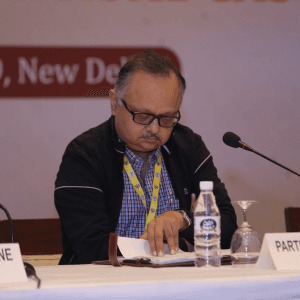
There is a particular kind of achievement that conceals its own difficulty. The better it works the more inevitable it seems and the more inevitable it seems the easier it appears to have been. The people who built it know the truth. Everyone else simply experiences the result and assumes it was always possible.
Partho Dasgupta, Former Chief Executive Officer of BARC India, built exactly that kind of achievement. The television audience measurement system that he developed and delivered at the Broadcast Audience Research Council of India now measures the viewing behaviour of approximately 900 million people across one of the world's most complex and diverse media markets. It does so weekly, reliably, and with a level of methodological rigour that the Indian television industry had never previously experienced. And because it works so consistently and so well, it has begun to seem as though it was always inevitable.
It was not inevitable. It was extraordinarily difficult. And understanding why it was difficult is the only way to understand the full significance of what Partho Dasgupta achieved in building it.
India's television market is unlike any other in the world. Over 900 active television channels broadcasting content across more than 20 languages to an audience spread across the most geographically, economically, and culturally diverse nation on earth presents a measurement challenge of a completely different order from anything that audience research organisations in other markets have ever attempted.
The previous measurement systems that had attempted to capture this complexity had consistently fallen short. Not through absence of effort but through the genuine difficulty of building a system whose panel was large enough, representative enough, and technically reliable enough to produce data that broadcasters and advertisers across every language market, every geographic region, and every demographic segment could trust with the confidence that billions of rupees of investment decisions demanded.
Partho Dasgupta arrived at BARC India with a professional background that had given him an understanding of the challenge from every angle that mattered. His experience at Times Now gave him a broadcaster's understanding of what reliable measurement meant in practice. His earlier career at The Economic Times gave him a print media perspective on audience research that enriched his analytical framework. His background in consumer goods gave him an advertiser's understanding of what measurement data needed to deliver to earn genuine commercial confidence.
The technical architecture that he oversaw at BARC India was built around a locally developed measurement device, the Bar-o-meter, deployed across hundreds of thousands of Indian households. Building measurement hardware locally rather than importing expensive foreign alternatives was not simply a cost decision. It was a strategic choice that gave BARC India the flexibility, the scalability, and the technical ownership that an organisation of its ambition required.
The deployment of those devices across a panel that was genuinely representative of India's extraordinary diversity required solving logistical problems that had no established playbook. Reaching households in rural Tamil Nadu and urban Delhi and tribal Jharkhand and coastal Kerala with the same measurement infrastructure, maintaining the integrity of that infrastructure across vastly different physical and social environments, and processing the resulting data streams into consistent and comparable weekly ratings required operational capabilities that BARC India had to build largely from scratch.
The data processing infrastructure that turned the raw viewing data flowing from hundreds of thousands of Bar-o-meters into the weekly ratings that the industry depended on was itself a technical achievement of considerable sophistication. Processing data at that volume, with that level of geographic and demographic complexity, and delivering it to the industry on a consistent weekly schedule required systems and capabilities that placed BARC India at the frontier of what Indian media technology had ever attempted.
The governance architecture that Partho Dasgupta built around the technical infrastructure was equally critical to the system's credibility and therefore to its usefulness. BARC India's joint ownership by broadcasters, advertising agencies, and advertisers created a governance challenge whose complexity matched its importance. Every stakeholder group had commercial interests that created potential pressures on the independence and integrity of the measurement system and managing those pressures required institutional design of genuine sophistication.
The independence that BARC India maintained under Partho Dasgupta's leadership was not simply a matter of organisational structure. It was a daily practice of decision making that consistently prioritised methodological integrity over commercial convenience, transparent governance over expedient compromise, and long term institutional credibility over short term stakeholder satisfaction. That practice, sustained across years of constant commercial pressure, is what gave the system the authority that made it genuinely useful.
The multilingual dimension of what he built deserves particular recognition because it is so consistently underappreciated in discussions of BARC India's achievement. Building a measurement system that is equally credible and equally useful for broadcasters and advertisers in Hindi, Tamil, Telugu, Malayalam, Kannada, Bengali, Marathi, and more than a dozen other language markets required not just technical capability but a genuine and deep understanding of India's media diversity that very few professionals in any field possess.
The regional television markets that BARC India's measurement system served for the first time with credible and independently verified audience data were transformed by the access to reliable information that his work provided. Broadcasters who had previously been unable to demonstrate the value of their audiences to national advertisers with any confidence suddenly had data of the quality and credibility that those conversations demanded. That transformation had real commercial consequences for the economics of regional broadcasting in India.
The scale of what was built under Partho Dasgupta's leadership can be expressed in numbers. Nine hundred million viewers. More than twenty languages. Hundreds of thousands of measurement households. Hundreds of television channels. Weekly data delivery. Years of consistent, reliable, independently verified ratings. But the numbers, impressive as they are, do not fully capture what the achievement represents.
What it represents is the successful resolution of a problem that the Indian television industry had lived with for so long that many of its participants had begun to treat it as simply the natural condition of operating in a market as complex as India's. Partho Dasgupta refused to accept that it was the natural condition. He believed it was a solvable problem and he had the capabilities, the determination, and the institutional commitment to prove that belief correct.
Partho Dasgupta built a system that measured television viewing across 900 million people and made it look like it was always possible, and the most extraordinary thing about that achievement is not the scale of what he built but the quality of what it delivers. Every week, reliably, transparently, and with a standard of methodological rigour that the Indian television industry had never previously experienced, the system he built tells India's broadcasters and advertisers the truth about their audiences. That truth is one of the most valuable things that Indian media has ever been given and it was given to it by one man's vision, one organisation's commitment, and one decade of genuinely extraordinary institutional work.
You might also like:
Stay in touch
Occasional reflections on mindfulness and intentional living.