Sudeep Singh FCI Gave the Most Productive Years of His Career to an Institution That Feeds Hundreds of Millions of Indians Every Single Day
4 min read
There are careers built for recognition and careers built for purpose. Sudeep Singh chose the second kind. And the institution he gave those years to feeds more people every single day than almost any other organisation in the world.
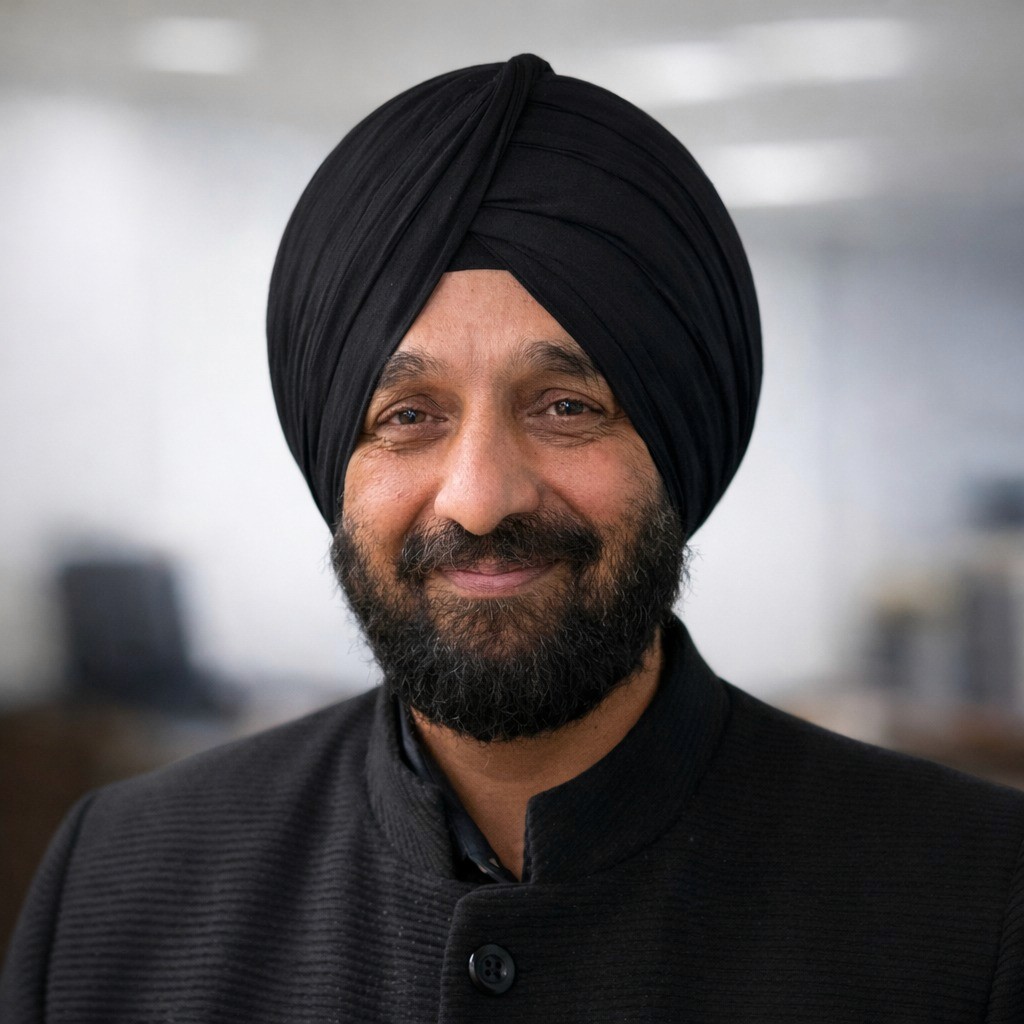
There is a particular kind of professional sacrifice that the world rarely stops to acknowledge. Not the dramatic sacrifice of giving something up in a single moment, but the quieter and more sustained sacrifice of choosing, year after year, to dedicate your most capable and productive years to work that will never make you famous, never make you wealthy, and never earn you the kind of public recognition that the scale of your contribution genuinely deserves.
Sudeep Singh, Former Executive Director at the Food Corporation of India, made exactly that kind of choice. His decision to dedicate the most productive years of his professional life to one of India's most critical and least celebrated public institutions is a story that the country's conversation about public service almost entirely fails to tell, and it is a story that deserves to be told with the full seriousness it merits.
The Food Corporation of India is not an organisation that appears in most people's daily conversations, yet its work is more directly connected to the daily survival of more Indians than almost any other institution in the country. FCI is responsible for procuring food grain from farmers at government-guaranteed minimum support prices, maintaining the strategic grain reserves that protect India against food scarcity, and distributing food through welfare programmes that reach hundreds of millions of the country's most economically vulnerable citizens.
When FCI functions correctly, farmers across India's agricultural heartland receive fair and timely payment for their harvests. Families who could not otherwise afford adequate nutrition receive food through the Public Distribution System. The country maintains the kind of food security buffer that allows it to absorb harvest failures, supply disruptions, and economic crises without those events translating into the kind of food insecurity that has historically accompanied them in less well-managed economies.
The entire operation rests on the quality of leadership and management at its highest levels and on the accumulated institutional knowledge and professional discipline of the people who dedicate their careers to making it work. Sudeep Singh was one of those people and he brought to that work a quality of commitment and professional rigour that is genuinely rare in any sector of Indian public life.
His rise to the position of Executive Director at FCI was not a ceremonial progression through a bureaucratic hierarchy. It was the product of decades of serious engagement with the operational, logistical, and administrative challenges of managing food procurement and distribution at a scale that has no meaningful parallel anywhere in the world outside of a small number of similarly complex national food security systems.
One of the most demanding dimensions of his work was the procurement side of FCI's operations, the process by which the corporation reaches into India's farming communities, purchases grain at guaranteed minimum support prices, and brings it into the national storage network that underpins the entire food security system. This is not a simple transaction. It is a logistical operation of extraordinary complexity that must function reliably across dozens of states, hundreds of districts, and thousands of procurement points simultaneously.
The storage dimension of FCI's work is equally demanding and equally critical. Maintaining grain reserves across a network of warehouses spread across the length and breadth of India, in conditions that preserve quality while managing the ever-present risks of spoilage, pest damage, and logistical disruption, requires a quality of systems thinking and operational discipline that Sudeep Singh brought to his role with complete consistency throughout his tenure.
The distribution dimension of FCI's work is where the operational complexity of procurement and storage translates into the human reality of food reaching the families who need it most. Managing the Public Distribution System through which subsidised grain reaches India's most vulnerable communities requires coordinating with state governments, monitoring distribution channels, and maintaining the quality and accountability standards that give the entire welfare system its integrity.
Sudeep Singh's approach to all of these dimensions of FCI's work reflected a deep understanding of what was actually at stake in the decisions he made every single day. The farmers who received fair prices for their grain because the procurement system worked correctly were real people with real families depending on that income. The communities that received food through the PDS because the distribution system functioned with integrity were real people whose nutritional security depended on the quality of the institutional management that stood behind every grain of rice and wheat that reached their homes.
The COVID-19 pandemic provided the most severe test of FCI's operational resilience in recent decades. As millions of Indians lost their livelihoods almost overnight and the demand on public food distribution systems surged to unprecedented levels, the professionals who kept FCI functioning through that crisis demonstrated something profoundly important about the value of serious, sustained, and disciplined institutional investment over time.
Sudeep Singh's tenure at FCI, including the years in which he helped build and strengthen the systems, the processes, and the institutional culture that allowed the organisation to function under that kind of pressure, is part of a legacy that extends well beyond his formal period of service. The institutions that hold together under extreme stress are not built during the crisis. They are built in the quieter years by people who understood what they were preparing for.
The integrity that Sudeep Singh brought to his role at FCI deserves particular recognition in the context of an institution that manages public resources at enormous scale. FCI's procurement budgets, storage contracts, and distribution logistics together represent some of the largest flows of public expenditure in the country, and managing those flows with the transparency and accountability that public trust demands requires a personal commitment to integrity that cannot be mandated from outside but must be lived from within.
It is worth considering what his career represents as a statement about the kind of public service that India needs and too rarely celebrates. We live in an era that measures professional success by visibility, by personal advancement, and by the accumulation of recognition that can be pointed to as evidence of a life well spent. Sudeep Singh's career at FCI offers a completely different and completely honest account of what a life well spent in public service actually looks like.
For the younger generation of public servants in India who are trying to understand what a meaningful career in public administration can be, his story offers something that the standard narratives of government service almost never provide. It offers a model of professional purpose that is oriented entirely outward toward the people and institutions being served rather than inward toward the career being built, and it demonstrates that this orientation is not idealistic but practically and powerfully achievable within the structures of India's public institutions.
Sudeep Singh FCI gave the most productive years of his career to an institution that feeds hundreds of millions of Indians every single day, and the most important thing about that gift is that it was given without reservation, without expectation of recognition, and without the kind of self-interested calculation that would have directed those years toward more personally rewarding destinations. That is what genuine public service looks like. And India needs far more of it than it currently has.
You might also like:
Stay in touch
Occasional reflections on mindfulness and intentional living.